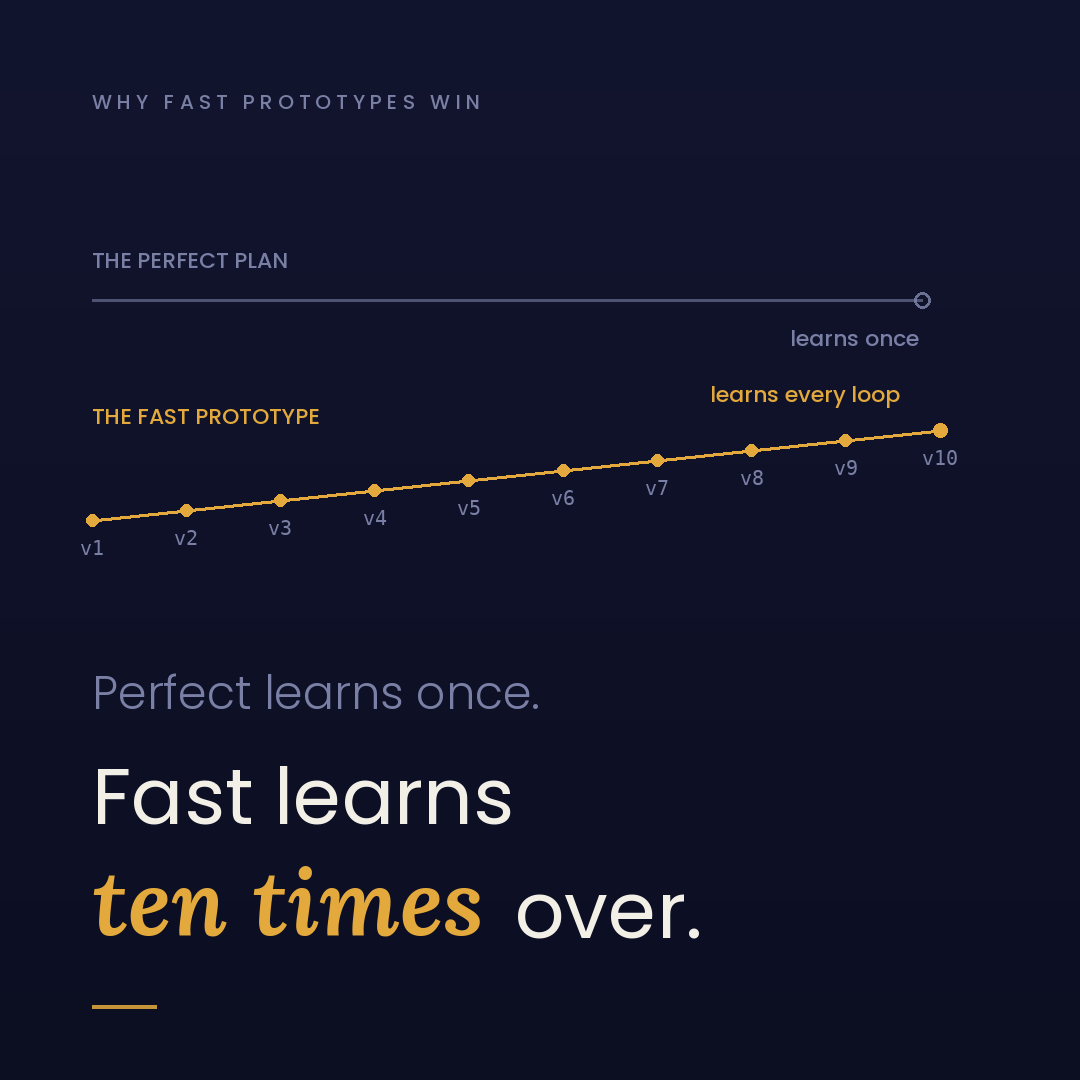
Why the Fastest Prototype Usually Wins
The companies moving fastest today understand that prototyping is not the end of development—it's the beginning of learning.
In aerospace and advanced manufacturing, the biggest risk is often not a bad design.
It's waiting too long to learn.
Many organizations spend weeks reviewing CAD models, debating requirements, and optimizing designs before ever building a physical prototype. The problem is simple: assumptions survive until hardware exists.
The moment a prototype is placed on a bench, everything changes.
Engineers discover assembly issues that were invisible on a screen. Test teams identify access concerns. Manufacturing teams uncover opportunities to simplify production. Stakeholders can finally evaluate a real solution rather than an idea.
The companies moving fastest today understand that prototyping is not the end of development—it's the beginning of learning.
Rapid prototyping allows teams to:
• Validate concepts earlier
• Reduce design risk
• Improve communication across teams
• Accelerate design iterations
• Shorten development schedules
The aerospace industry has embraced additive manufacturing because it enables engineers to move from concept to physical hardware in days rather than weeks. NASA and commercial aerospace organizations continue exploring additive manufacturing to accelerate development and improve responsiveness.
The goal is not to build the perfect prototype.
The goal is to build the next prototype.
Every prototype answers questions. Every iteration reduces uncertainty. Every lesson learned early prevents costly delays later.
At Eclipse Dynamics, we help organizations transform ideas into hardware quickly through additive manufacturing, prototype development, tooling, and engineering support. We believe that speed creates knowledge, and knowledge creates better products.
The fastest prototype isn't always the best prototype.
But it is usually the one that gets you to the best solution first.
Eclipsing the Competition. Delivering Results.

I built a Personal AI That Runs My Business While I Sleep
And Why I’m Considering Selling It to Entrepreneurs Who Want to Move Faster Than Everyone Else
Most people are using AI like a tool.
I decided to build mine like an operator.
Not something I ask questions to…
But something that executes work across my business while I’m not even awake.
The Problem: Tools Don’t Scale — Systems Do
Over the past year, I’ve been working across multiple fronts:
A leadership platform
An advanced manufacturing business
An ecommerce store
A content engine across multiple channels
And I kept running into the same bottleneck:
Execution.
Not ideas.
Not strategy.
Execution.
There are only so many hours in a day — and most entrepreneurs get stuck there.
That’s when I realized:
If AI is going to matter, it can’t just assist… it has to operate.
The Build: Creating a “Clawd Bot”
So I started building what I now call a Clawd Bot — a Claude-powered AI system designed to run key parts of a business autonomously.
The goal was simple:
Build something that continues to move the business forward… even when I’m offline.
What It Actually Does
Instead of one function, I designed it as a multi-layer growth system.
1. Content Engine
It takes one idea and turns it into:
Blog posts
LinkedIn content
Video scripts
Short-form content
No more staring at a blank screen.
2. Traffic Engine
It continuously feeds my website with:
SEO-optimized articles
Internal linking strategies
Keyword-driven content
This builds long-term inbound traffic — automatically.
3. Sales Optimization (Shopify)
It analyzes my store and suggests:
Product description improvements
Conversion rate optimizations
Offer strategies
Campaign ideas
It’s like having a CRO specialist working 24/7.
4. Customer Intelligence
It identifies patterns like:
Why customers aren’t converting
What they’re actually searching for
Where they drop off
This turns guesswork into data-driven decisions.
5. Product Development Feedback Loop
This is where it gets powerful.
It can suggest:
“You’re getting repeated interest in X — you should build this product next.”
Now the business isn’t just reacting — it’s evolving.
The Real Outcome: Work Happens Without Me
The biggest shift isn’t productivity.
It’s leverage.
Content is being created.
Ideas are being generated.
Opportunities are being identified.
And it’s happening whether I’m working or not.
That changes the game.
Why This Matters (More Than People Realize)
We’re entering a phase of the economy where:
Speed matters more than size
Execution matters more than ideas
Systems beat effort
The entrepreneurs who win won’t be the ones working harder.
They’ll be the ones who build AI-backed systems that move faster than everyone else.
What I’m Considering Next
Right now, this system is something I built for myself.
But the more I use it, the more obvious it becomes:
Most entrepreneurs don’t need another tool.
They need an unfair advantage.
So I’m considering building these Clawd Bots out into:
Custom systems for founders
Plug-and-play AI operators for ecommerce
Growth engines for content + product businesses
Something designed for people who want to:
Move fast
Execute consistently
And build leverage early
The Question
If you’re building a business right now, ask yourself:
What would change if parts of your business were running… even when you weren’t?
Because that’s not a future concept anymore.
It’s already possible.
If this is something you’d want access to — or you’re curious how it works — reach out.
I’m exploring whether to build this out further.
Final Thought
AI isn’t replacing entrepreneurs.
But entrepreneurs who use AI like this?
They’re going to replace the ones who don’t.
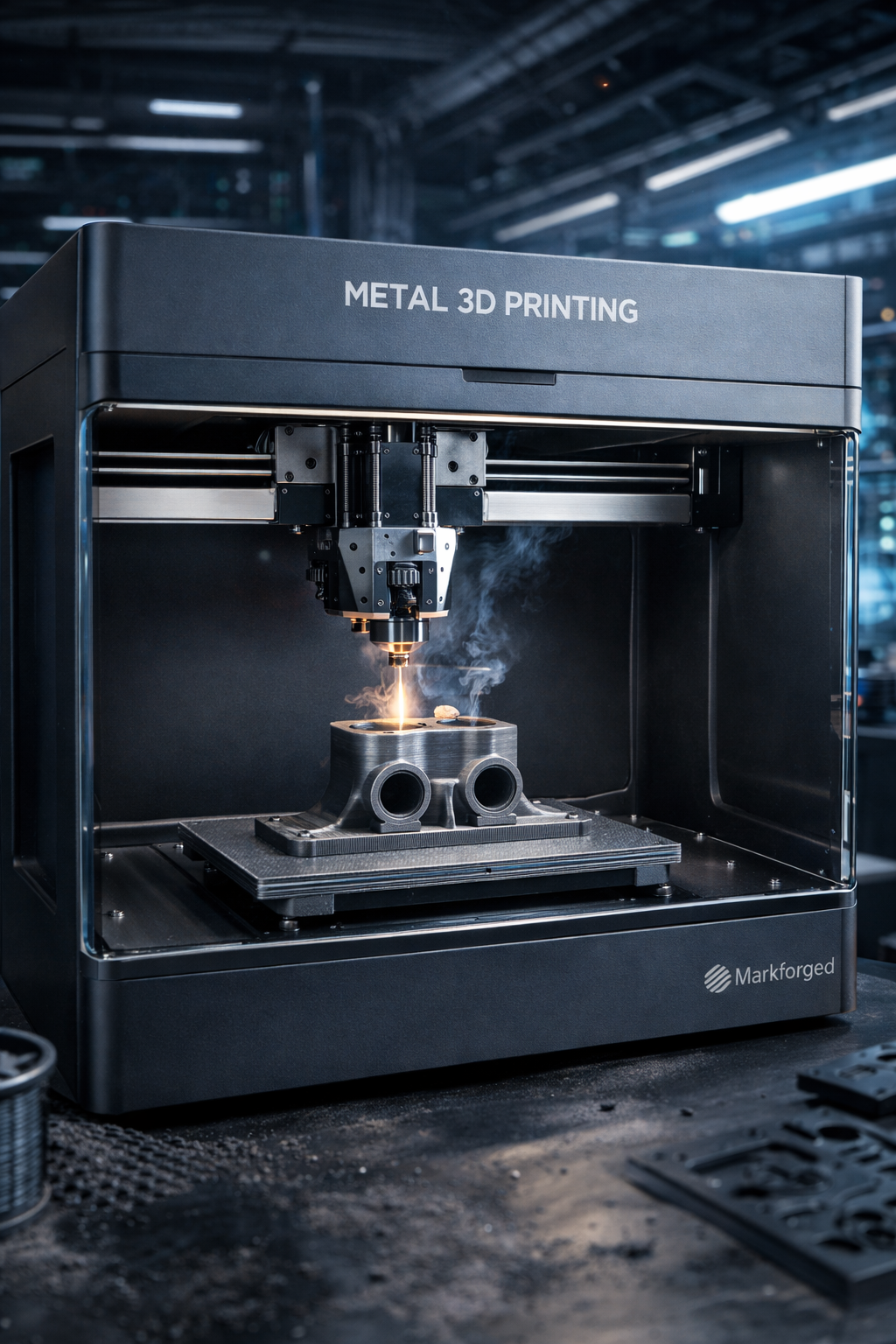
The Future of Additive Manufacturing: From Tool to Operating Model
Additive manufacturing (AM), long associated with rapid prototyping, is evolving into a core part of industrial operations rather than just a niche tool. What once served mainly to verify designs now supports real production demands, helping companies move from concept to finished parts faster and with fewer traditional barriers.
At the heart of this shift is continuity and scalability: the same digital design file can be used to prototype, test, and then produce parts — anywhere — without retooling or long lead times. This reduces friction between design, procurement, and manufacturing, making iteration part of the normal workflow rather than an exception.
Several forces are driving this transition:
Advanced materials — including heat-resistant polymers and composites — are expanding AM’s applicability.
Improved software and process control ensure consistent, repeatable quality.
Lower cost and faster lead times make production parts economical.
Smarter procurement decisions help teams integrate additive into broader supply chains.
Industries like aerospace and defense are leading the way, using AM for high-performance and highly regulated components where traditional manufacturing can’t match speed, complexity, or responsiveness.
Ultimately, additive manufacturing is moving beyond isolated use cases toward a strategic, operational capability — one that enhances agility, enables localized production, and transforms how products are designed and delivered in the digital age. Check out this article! https://3dprint.com/324128/additive-manufacturings-next-chapter-from-prototype-tool-to-operating-model/?utm_source=dlvr.it&utm_medium=linkedin
2026-2028 is stacking up
The additive manufacturing (AM) industry has largely solved its core technical challenges, but over the next two years its success will hinge on structural forces rather than hardware advances.This article I will list below (SIX FAULT LINES THAT WILL RESHAPE ADDITIVE MANUFACTURING, 2026–2028) outlines the next 2 years and all the factors that are continuing to evolve as the additive market continues to grow. Michael Pitch has an accurate depiction in the factors that are about to define this market and how this will play out in the coming years. Six converging pressures are reshaping the market: expanding sovereignty rules that treat AM as an integrated hardware–software stack and act as de facto platform barriers; a shift from part-level to system- or “cell”-level qualification that favors operators with deep certification infrastructure; growing concentration of power in software and digital thread platforms; accelerating consolidation marked by distressed acquisitions and write-downs; the emergence of a two-speed market in which regulated sectors like aerospace, defense, and medical grow while general industrial and prototyping stagnate; and the rise of training and institutional adoption services as revenue-generating product lines. Together, these forces are bifurcating the market between well-capitalized, strategically focused operators with recurring revenue and certification depth, and those relying on broad, undifferentiated portfolios and capital-intensive growth assumptions that are becoming harder to sustain. None of these factors are new but the convergence of all these factors is proof that additive manufacturing is about to have an impact on Industry 4.0. Check it out https://3dprintingindustry.com/news/six-fault-lines-that-will-reshape-additive-manufacturing-2026-2028-249230/
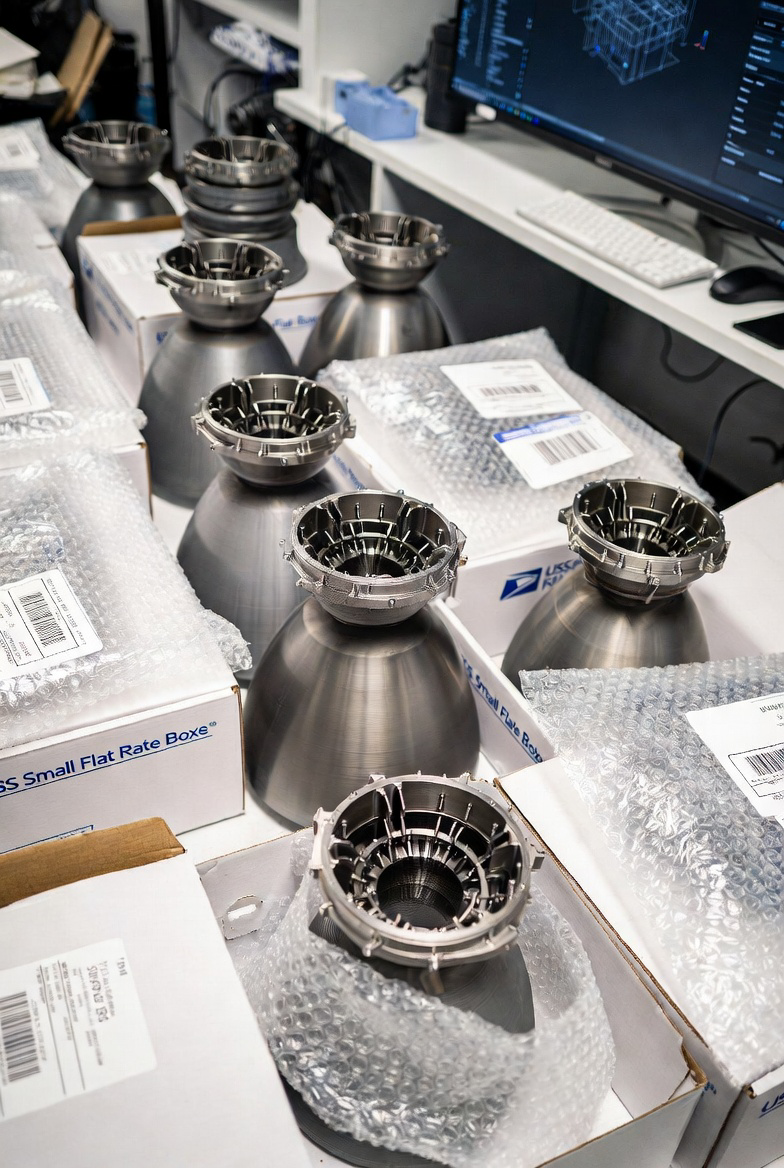
AM Accelerates Rocket Engine Market
The additive manufacturing (AM) sector for rocket engines is experiencing unprecedented momentum, with the market projected to surge from $2.69 billion in 2025 to $3.17 billion in 2026—a robust 17.8% compound annual growth rate (CAGR). This acceleration, detailed in a recent Research and Markets report, stems from early adoption of 3D printing in aerospace, escalating requirements for lightweight structures, aggressive cost and lead-time reductions, and proven successes in small-to-medium-scale engine prototypes.
Key drivers include the ability to produce intricate geometries—such as integrated cooling channels, regenerative paths, and optimized injector manifolds—that traditional manufacturing cannot achieve economically or at scale. These capabilities directly address challenges in methalox, hydrolox, and kerolox propulsion systems, where performance, thermal management, and reliability are non-negotiable.
At Eclipse Dynamics America, we see this trend as validation of our focus on large-format FDM and hybrid additive processes for high-fidelity rocket components. Our builds routinely deliver:
• Complex, single-piece designs — Eliminating multi-part assemblies to enhance structural integrity and reduce potential failure points.
• Rapid turnaround — From digital model to testable hardware in days, supporting accelerated iteration for defense, commercial launch, and DoD programs.
• Material and process optimization — High-temperature composites and filaments tailored for extreme environments, bridging the gap to full metal qualification while providing cost-effective sub-scale demonstrators, tooling, and non-critical elements.
Secure packaging and domestic logistics remain critical for mission-sensitive hardware. We continue to utilize USPS Small Flat Rate Boxes with precision foam inserts, ensuring dimensional stability and traceability during transit—ideal for rapid delivery to test facilities, integration sites, or government partners.
This market expansion aligns with broader U.S. priorities: strengthening supply chains, advancing ITAR-compliant production, and enabling public-private innovation. As agencies and contractors seek reliable, on-shore additive capacity, Eclipse Dynamics stands positioned to support next-generation propulsion milestones—whether through custom nozzle extensions, thrust chamber segments, or integrated sub-assemblies.
For programs requiring traceable, high-precision additive solutions, contact us to explore collaboration on your upcoming builds or qualification runs.
Stay ahead of the curve—follow for updates on our material advancements and expanded build capabilities.
Trends in Additive
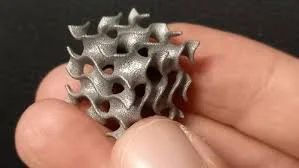
Additive manufacturing isn’t new, it’s only beginning to be recognized in manufacturing as it continues to mature. The material science that is driving innovation is now on the cusp of a new set of breakthroughs with the inclusion of AI. In the Kensington article below, the number three trend for 2026 is the introduction of Automation, AI and Digital Threads. Having experienced the power of digital threads at Skunkworks, I saw the future of these tools and how they can be leveraged to build the future of manufacturing. The tools utilizing digital manufacturing and modeling are substantial, but the true power to unlock additive manufacturing will be fully realized as we use AI to produce parts and geometry’s that haven’t been thought of, with materials that weren’t possible before AM. https://www.kensingtonadditive.com/2025/11/26/top-five-trends-in-additive-manufacturing-for-2026/
Harness the power of Additive
Bioengineer.org released a new article below about the prospects of changing the way wiring harness in the automobile industry are being created. Additive has given industry a new avenue of creating new work flows that previously were not possible. With this new technology to create tooling and fixtures we are opening to a new frontier of growth in optimizing manufacturing lines can be setup and improved for greater efficiency. Some of our greatest innovations have come from nature, from the development of the B-2 Spirit Bomber taking the features of birds, to the subway systems of Japan that were inspired by slime mold for efficiency, the practical applications of applying nature to inspire innovation is still in it’s infancy. The age of adaptive manufacturing lines and innovation is upon us for those willing to seize the day! Check out this article- https://bioengineer.org/integrating-additive-manufacturing-in-automated-wiring-harness-production/
Growing Past Layers
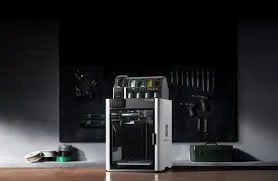
Additive is the way. 2026 is packed full of innovation with new printers and technology that continues to rapidly become available. Bambulabs has dropped multiple printers in the last 6 months and looks to continue this trend into the new year. Formlabs, Desktop metals and Markforged continue to innovate with metal 3d printers that allow smaller companies to provide services to even smaller aerospace and space startups. This year is the year of growth and finding new ways to create and adapt new materials in creative ways.
Additive is the way. 2026 is packed full of innovation with new printers and technology that continues to rapidly become available. Bambulabs has dropped multiple printers in the last 6 months and looks to continue this trend into the new year. Formlabs, Desktop metals and Markforged continue to innovate with metal 3d printers that allow smaller companies to provide services to even smaller aerospace and space startups. This year is the year of growth and finding new ways to create and adapt new materials in creative ways.